8 IT Project Management Methodologies Compared
The most popular advice about IT project management methodologies is also the least useful: adopt Agile because technology changes quickly. No methodology is universally best. The right choice depends on how much change a project can absorb, how much evidence its sponsors need and how often business stakeholders will move the target.
A data centre migration with contracted hardware deliveries needs different controls from a customer application whose requirements change after user testing. A support team handling production incidents needs a different rhythm again. Calling all of them Agile doesn't resolve their dependencies, acceptance criteria or funding decisions.
The distinction between delivery and control matters. In its examination of European Regional Development Fund-supported e-government projects, the European Court of Auditors found that 82% of audited projects weren't implemented in line with the planning in their grant applications, although the vast majority delivered their intended outputs.
Completing deliverables and keeping a project under control aren't the same achievement.
These approaches answer different management problems. Some organise project decisions, some organise team delivery, and others strengthen engineering or operations. Their value lies in the conditions where they work, the compromises they require and the signals that a team needs to adapt them.
Table of Contents
- 1. Waterfall
- 2. Scrum
- 3. Kanban
- 4. Extreme Programming (XP)
- 5. PRINCE2 (Projects IN Controlled Environments)
- 6. Lean IT
- 7. Scaled Agile Framework (SAFe)
- 8. DevOps
- How the Eight Methodologies Compare at a Glance
- Picking Your Method Without Starting From Scratch
1. Waterfall
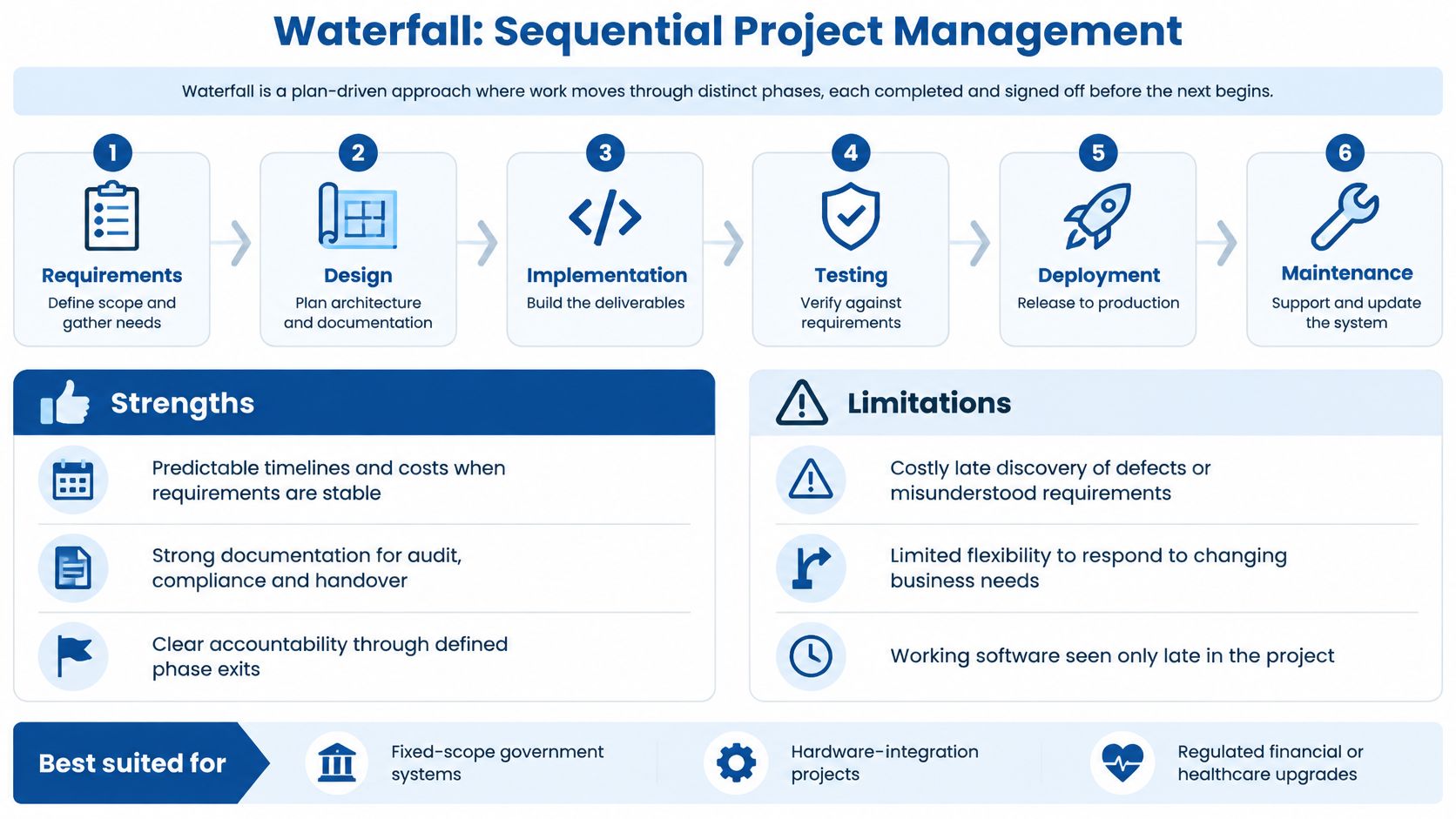
Waterfall suits work whose dependencies are better understood than its opportunities for experimentation. Teams progress through requirements, design, implementation, testing, deployment and maintenance, generally obtaining approval before moving into the next phase.
Consider a hospital replacing network equipment across clinical buildings. Engineers need an agreed design, procurement specifications, installation access and a rehearsed cutover. Reopening the architecture after equipment arrives isn't useful flexibility. It's expensive rework.
Waterfall gives project managers a baseline against which to track supplier commitments, costs and acceptance. The weakness is that a signed requirements document can conceal unresolved business assumptions.
Where sequential control earns its place
A fixed-scope government system, infrastructure installation or regulated system upgrade can justify sequential approvals. However, auditability doesn't require postponing every test until development finishes.
- Agree acceptance early. Requirements should describe demonstrable outcomes, including security, performance and operational support.
- Control phase exits. Design approval should require resolved dependencies, not merely a completed document.
- Keep changes visible. Maintain a risk register and change log, recording effects on scope, cost and schedule.
The practical distinction in understanding Agile and Waterfall methodologies is whether feedback can alter delivery without repeatedly invalidating the approved plan.
The signal to adapt: stakeholders can't agree what they need until they interact with working software. At that point, retain procurement and deployment gates but introduce prototypes, iterative configuration and early integration testing. More detailed upfront documentation won't remove genuine product uncertainty.
2. Scrum
A retail banking team developing a new account-opening journey needs regular decisions about customer experience, identity checks and application abandonment. Scrum fits when stakeholders can inspect working increments and change priorities, because approving every feature before development begins freezes requirements nobody can yet confirm.
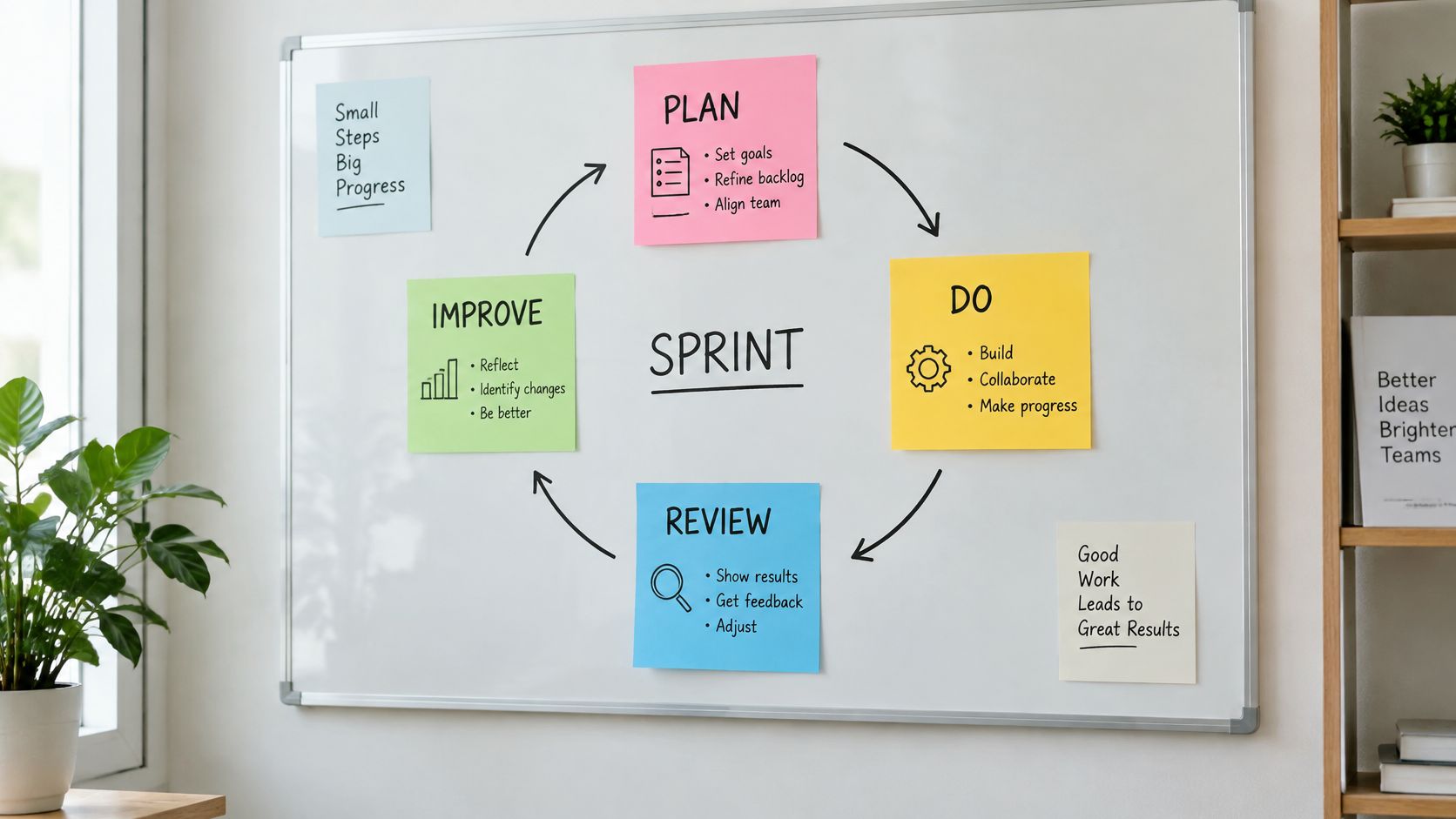
The framework organises work around a prioritised product backlog, a sprint goal and recurring opportunities to inspect and adapt. The Product Owner makes ordering decisions, the Scrum Master supports effective use of the framework, and Developers build usable increments.
In an Ireland-focused mixed-method study, Scrum was the most commonly selected Agile methodology among respondents, chosen by more than 44% of participants, according to the Dublin Business School research. Popularity among Irish practitioners says nothing about whether Scrum suits any particular Irish project.
Decision rights decide whether Scrum works
Scrum becomes ineffective when the Product Owner can't resolve competing demands or when specialists remain allocated across unrelated projects. Ceremonies can't compensate for unavailable people or unresolved authority.
Take the account-opening example. The Product Owner, unwilling to disappoint the compliance team, kept identity-verification work and fraud-check enhancements both ranked as top priority, so developers split the sprint across two goals and finished neither. The fix was a forced single ordering: compliance items first, fraud work moved to the next sprint, and every subsequent sprint delivered a complete, testable increment.
Maintain a consistent sprint length, refine upcoming work and make the Definition of Done explicit. Testing, security checks and integration shouldn't disappear into a separate queue while the team reports development as complete.
Retrospectives should produce specific changes to working practices. A sprint review exists to support business decisions; if it has become a slide presentation, the stakeholders who matter have stopped attending.
The signal to adapt: urgent production requests repeatedly displace the sprint goal. Separate support demand into a flow-based queue, or change the delivery model. A team that keeps abandoning sprint plans has a demand problem that stricter estimation will never solve.
3. Kanban
A service desk doesn't need to pretend that incidents arrive in sprints. Kanban supports continuous demand by making work visible, limiting work in progress and helping teams manage flow.
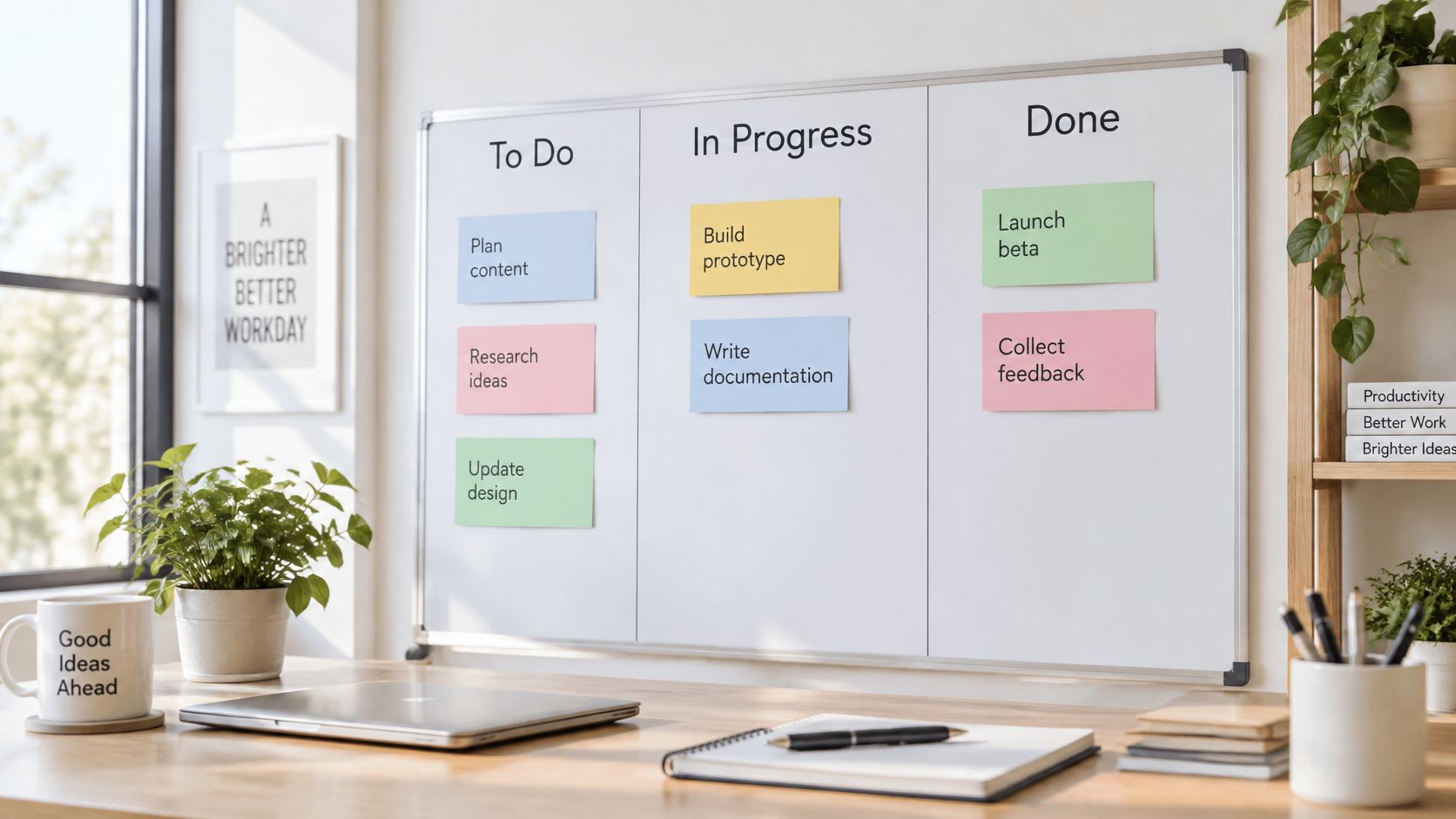
Cards represent work items, while columns represent actual workflow states. The important word is actual. A board containing only To do, Doing and Done won't expose a queue waiting for supplier approval or security review.
For an application-maintenance team, useful states might include assessment, development, review, validation and release readiness. Explicit policies clarify when work can move and what evidence must accompany it.
Manage blocked work, not card movement
Work-in-progress limits should encourage the team to finish or unblock existing work before starting more. They aren't individual productivity targets, and they shouldn't be raised whenever the queue becomes uncomfortable.
- Map waiting states. Distinguish active engineering from time awaiting decisions, environments or suppliers.
- Define urgency. Establish an explicit policy for incidents that justify interrupting other work.
- Measure flow. Track cycle time, throughput and ageing work, then examine where items stall.
A Jira board alone won't create these behaviours. In a study of professionals from Irish IT companies, 62.7% rated digital project-management tools positively, according to the Dublin Business School tools study. Teams still need common ownership rules, workflow definitions and training.
The signal to extend the method: a visible queue isn't enough to coordinate a major release, funding decision or cross-project dependency. Keep Kanban for execution, but add release planning and project governance rather than expecting the board to provide them.
4. Extreme Programming (XP)
Scrum can expose unfinished work without explaining how engineers should prevent it. Extreme Programming addresses the engineering discipline behind reliable software delivery.
XP combines practices such as test-driven development, pair programming, continuous integration, refactoring and small releases. Its value is strongest when requirements change frequently and developers must modify the code without repeatedly destabilising existing behaviour.
Consider a payroll application receiving changes to calculation rules. Developers need rapid feedback that a new rule hasn't broken existing calculations, reporting or integration. Automated tests and frequent integration make that feedback part of development rather than a separate end-stage activity.
Engineering rule: a shorter planning cycle doesn't make a fragile codebase easier to change.
Build technical feedback before promising speed
Begin with a reliable build, automated tests around critical behaviour and a continuous-integration pipeline. On a legacy application, tests around existing behaviour can provide a safer starting point than rewriting large components.
Pair programming deserves deliberate use. Rotating pairs can spread knowledge of payment logic or integration code, but pairing without a clear purpose can exhaust specialists and create an expensive observation exercise.
- Protect refactoring. Improving structure should accompany feature work rather than wait for an undefined clean-up project.
- Keep changes small. Reviewable changes are easier to understand, test and reverse.
- Maintain business access. Engineers need timely answers about intended behaviour, not assumptions passed through a chain of intermediaries.
The signal to extend XP: technical delivery becomes dependable, but funding, supplier coordination and business ownership remain unclear. XP doesn't replace project governance. Combine its practices with Scrum, Kanban or a governed lifecycle so that engineering quality supports an agreed business outcome.
5. PRINCE2 (Projects IN Controlled Environments)
PRINCE2 is useful when the hardest question is who can authorise what. It provides a process-based approach to business justification, responsibilities, planning, risk, quality, change and progress.
An enterprise resource planning replacement illustrates the need. Finance owns business benefits, a supplier configures the platform, internal IT manages integrations and department heads approve changed processes. Without clear decision rights, each group can believe another group owns an unresolved issue.
PRINCE2 supports staged authorisation and management by exception. The Project Board sets direction and tolerances, while the project manager manages within those boundaries and escalates when forecasts exceed them.
Make governance proportionate
The business case should remain a decision document. If implementation costs rise or expected benefits shrink, sponsors need to reassess whether continuing remains justified.
- Define tolerances clearly. Establish when forecast changes to cost, schedule, scope, quality, benefits or risk require escalation.
- Approve useful stages. Stage boundaries should support investment decisions, not mirror arbitrary reporting periods.
- Tailor the paperwork. Maintain evidence needed for decisions and assurance, rather than producing documents because templates exist.
European public-sector guidance reinforces the importance of explicit accountability. The European Commission's PM² guidance distinguishes programme-level IT steering from project-level steering and identifies System Owner and System Supplier responsibilities for IT projects.
The signal to change its application: project managers wait for board approval on routine delivery choices. Retain PRINCE2's authorisation structure, but delegate decisions within agreed limits. Governance should expose material exceptions without turning backlog ordering into a committee responsibility.
6. Lean IT
An employee requests access to a business application. The request passes through management approval, licensing, security review and fulfilment, but spends most of its elapsed time waiting.
Lean IT starts with that end-to-end experience, not the utilisation of each department. It applies lean principles to improve customer value and reduce waste, including avoidable hand-offs, queues, defects and duplicated work.
A value stream map makes processing time and waiting time visible. It can reveal that automating fulfilment won't materially improve the service while approval requests remain unattended.
Improve the whole service
Define value before removing steps. In an access workflow, the desired outcome is timely, appropriate access with an accountable approval trail, not faster ticket closure.
Useful baseline measures include lead time, rework, defects and hand-offs. Front-line staff should help interpret them because formal process diagrams often omit the workarounds used to get requests completed.
The discipline of continuous improvement means testing a specific change and checking its effect. For example, standard access profiles could reduce repeated clarification while preserving approval requirements.
Removing a control isn't an improvement if another team inherits the risk.
Lean IT breaks down when managers treat waste reduction as a synonym for cutting staff. Overloading the remaining specialists can lengthen queues and remove the capacity needed to improve the process.
The signal to extend the method: the team has improved flow but still needs to deliver a bounded transformation with funding, dependencies and acceptance criteria. Lean informs that project, but doesn't replace its governance or delivery plan. Combine process improvement with a suitable project framework.
7. Scaled Agile Framework (SAFe)
SAFe becomes relevant when coordination across teams is the delivery problem. It applies lean and Agile practices across connected teams and value streams, linking delivery with broader planning and investment decisions.
Consider a telecommunications provider changing customer billing. Application teams, integration engineers, data migration specialists and operational teams must align their work. A feature can be complete within a team while remaining unusable because another team hasn't delivered a dependency.
SAFe uses structured planning, including PI planning, to make shared objectives, dependencies and risks visible. Its practical value depends on whether leaders use those discussions to make trade-offs.
Scale coordination, not ceremony
Start with a value stream whose teams need coordinated delivery. Applying the full structure to independent teams can add meetings without improving outcomes.
Leadership must also address capacity constraints. Ireland's Digital Decade country report identifies digital skills and national digital capability as strategic priorities, reinforcing the need to assess available skills before choosing a demanding operating model.
- Expose specialist constraints. Shared architects, testers and security reviewers need realistic capacity plans.
- Resolve dependencies. A dependency board is useful only when someone can change sequencing, scope or staffing.
- Measure outcomes and flow. Comparing team velocity doesn't establish whether the programme is delivering usable value.
Building an Agile organisation requires decisions about leadership, delegation and team structure, not just a shared event calendar.
The signal to simplify: teams spend more effort reporting dependencies than removing them. Review architecture and team boundaries before adding coordination roles. Where teams can release independently, lighter shared planning may be more appropriate than continued framework expansion.
8. DevOps
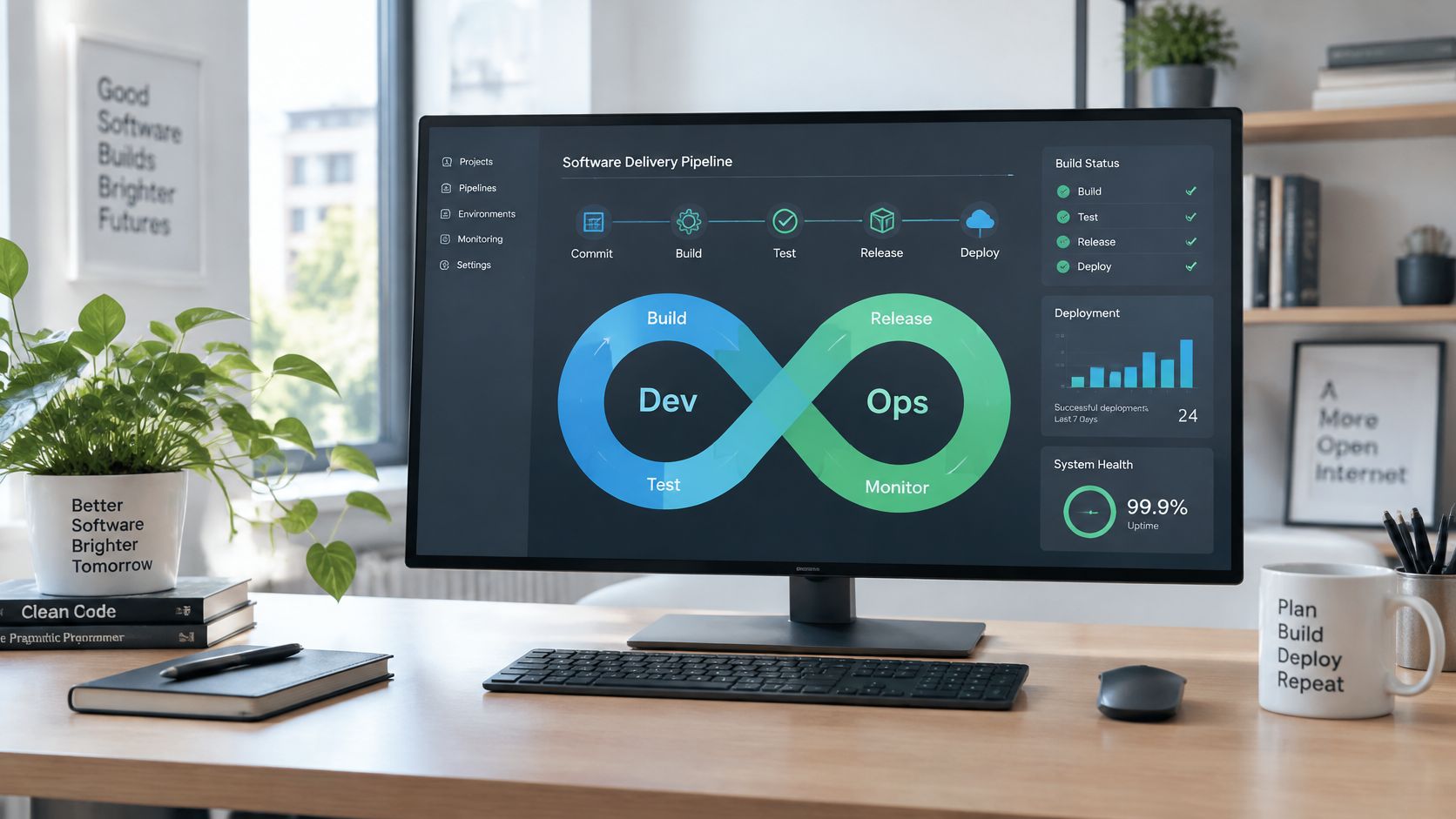
A development team can finish every planned feature while operations still faces a risky manual release. DevOps addresses the gap between completed code and a dependable live service.
It combines shared operational ownership with practices such as continuous integration, continuous delivery, infrastructure as code and monitoring. Strictly speaking, it isn't a complete project management methodology. It is an operating approach that makes delivery and service management less disconnected.
For a financial institution releasing application changes, a Git-based workflow and deployment pipeline can assemble test results, approval evidence and release records. Automation doesn't remove assurance. It can make assurance repeatable and traceable.
Own production outcomes
Start with a dependable build-and-test pipeline before attempting wide-scale automation. Add deployment controls, environment configuration and observability as the team becomes able to support them.
Tools such as GitHub Actions, GitLab CI/CD and Terraform can support the workflow, but a toolchain doesn't resolve unclear service ownership. Developers and operations staff need agreed responsibilities for releases, incidents and recovery.
Use DORA-style delivery measures, including deployment frequency, lead time, change failures and recovery time, to examine improvement rather than rank individuals. Pair those measures with service reliability and user outcomes so that frequent releases don't become an end in themselves.
The signal to extend the approach: releases become reliable, but teams still build poorly prioritised features or lack clear investment approval. Add product and project governance rather than more pipeline tooling. Blameless incident reviews should also produce owned corrective actions, not only document what happened.
How the Eight Methodologies Compare at a Glance
| Methodology | Decisive project condition | Change and risk signal | Governance weight | Signal it has been outgrown |
|---|---|---|---|---|
| Waterfall | Requirements are stable, suppliers are fixed, and approval gates shape payment or acceptance | Late change is expensive because downstream design, build and test work depends on earlier sign-off | High, with formal stage approval and documentation | Change requests keep reopening signed requirements, or stakeholders need working software before final approval |
| Scrum | The product can be released in increments, and a Product Owner can make trade-offs every sprint | Scope can move between sprints, while the sprint goal protects the team from constant interruption | Medium, with backlog ordering, reviews and retrospectives | Stakeholders need parallel streams of urgent work, or compliance evidence is weak because each increment is documented differently |
| Kanban | Work arrives continuously, priorities shift daily, and service-level expectations matter more than fixed iterations | Flow control exposes queues and work in progress, so delays are visible before deadlines slip | Low to medium, with explicit flow policies and capacity rules | Teams need coordinated release dates, or one queue keeps starving higher-value work because pull rules are too loose |
| Extreme Programming (XP) | Requirements are changing, but the codebase can be changed safely through tests, refactoring and small releases | Technical practices carry the risk, so weak testing turns fast feedback into rework | Low to medium, with engineering discipline and close customer involvement | Automated tests, pairing and refactoring are not being maintained, or delivery speed depends on a few specialist developers |
| PRINCE2 (Projects IN Controlled Environments) | Investment approval, tolerances and accountability must be clear across sponsors, managers and delivery teams | Change is handled through defined authority, so escalation is explicit rather than informal | High, with business cases, stages, roles and decision records | Governance checks delay useful decisions, or teams report paperwork progress while delivery risk stays hidden |
| Lean IT | Delays, hand-offs and rework can be mapped to a service or delivery path that teams can actually change | Improvement comes from removing waste in small steps, not from adding more control gates | Medium, with value-stream focus and continuous improvement | Local improvements stop helping because dependencies sit across several teams or suppliers |
| Scaled Agile Framework (SAFe) | Many teams must align on shared priorities and dependencies while keeping iterative delivery cadences | Change is absorbed inside planning structures, but dependency management becomes the main source of delay | High, with multi-level planning and portfolio alignment | Planning overhead exceeds useful coordination, or teams spend more time preparing events than resolving dependencies |
| DevOps | Release frequency and recovery speed matter, and teams can own services across build, deployment and operations | Small releases reduce change risk only when tests, deployment controls and observability are dependable | Medium, with shared service ownership and delivery evidence | pipelines are reliable but product priorities, funding decisions or service ownership remain unclear |
Read the table as a selection aid, not a league table. Each method solves a different delivery problem, and each fails in a recognisable way when the project conditions change.
Waterfall fits a controlled upgrade where scope, suppliers and acceptance points are settled. Its weak point is late discovery. If users need to see working software before the original plan is fixed, a sequential gate structure will hide risk until it is expensive to handle.
Scrum fits product work where feedback can change the backlog. It breaks down when urgent operational work fragments the sprint or when governance sits outside the team without clear decision rights. Kanban handles continuous demand better, especially in service desks and maintenance queues, but it needs explicit policies when several groups compete for the same capacity.
XP is the right call when code quality practices can keep pace with changing requirements. Its discipline is the trade-off: without tests, refactoring and continuous integration, short cycles produce defects instead of feedback. PRINCE2 suits programmes where approval, tolerance and accountability must be visible. It becomes burdensome when reports describe control rather than actual delivery risk.
Lean IT targets delay and waste in a value stream, so it works best where teams can change the hand-offs they own. SAFe addresses coordination across many teams, with the cost of extra planning structure. DevOps improves software delivery when automation is backed by service ownership and evidence. It stalls when faster releases expose unclear priorities or weak assurance.
Picking Your Method Without Starting From Scratch
The selection decision starts with change rate, audit burden and delivery cadence. Stable requirements and expensive physical dependencies favour sequential planning. Evolving product needs favour iterative delivery, while continuously arriving requests favour flow-based management.
Auditability is a separate decision. A team can work iteratively while maintaining traceable requirements, approvals, tests and release evidence. The European Commission's PM²-Agile guide explicitly integrates Agile roles and practices with a wider project lifecycle, demonstrating that adaptive delivery needn't mean informal governance.
Pair methods by responsibility
Useful hybrids give each approach a clear job. They don't require teams to maintain competing plans or translate the same progress into unrelated reporting systems.
- PRINCE2 with Scrum. Sponsors authorise investment and set tolerances; the Product Owner orders work within those boundaries. Steering reports show accepted increments, forecast expenditure, material risks and decisions needed.
- Kanban inside an Agile programme. Support requests follow explicit flow policies while product teams retain a planned delivery cadence. Capacity allocation makes the cost of interruptions visible.
- XP within DevOps. Automated tests, refactoring and small changes strengthen the code entering the pipeline. Deployment automation and monitoring extend that feedback into production.
- Waterfall with iterative implementation. Procurement, architecture and cutover retain formal approvals, while configuration and pilot deployments use feedback to improve subsequent work.
Hybrid contracts need equal care. Acceptance, change control and payment should reflect what suppliers are committing to deliver. EY Ireland's technology solution delivery guidance recognises Agile, Waterfall and adaptive hybrid approaches according to programme and customer requirements.
Change the constraint, not every process
Methodology selection should also account for role availability. A team without an authorized Product Owner won't fix prioritisation by introducing sprints, and a shared security specialist won't become more available through additional planning events.
The European Commission's PM² methodology family supports tailoring to organisational and project needs. The practical objective is sufficient control with an administrative burden proportionate to the work.
A useful first step is to audit a pair of live projects against the comparison table, identify the principal mismatch and change a specific element. That might mean a work-in-progress limit, clearer stage approval or automated acceptance tests. Managers needing structured lifecycle grounding can use project management programmes to connect those local improvements with initiation, planning, execution and closure.
European Institute of Leadership and Management offers a self-paced online Mini-MBA in Project Management covering the lifecycle from initiation to closure. Its Programme Certificate in Project Management is aimed at project managers, team leaders and people moving into project management roles. Managers seeking structured grounding for methodology selection can visit European Institute of Leadership and Management to explore these pathways.