Programme Certificate in Information Technology


€396.00 Original price was: €396.00.€69.00Current price is: €69.00.
Welcome to the Programme Certificate in Information Technology, a comprehensive professional development programme offered by the European Institute of Leadership and Management (EILM).
In today’s increasingly digital and technology-driven business environment, information technology plays a fundamental role in organisational efficiency, innovation, competitiveness and sustainable growth. Organisations across all sectors rely on effective IT management, digital transformation and technological innovation to improve business processes, enhance operational performance and respond to changing market demands.
The Programme Certificate in Information Technology is designed to equip participants with a broad understanding of information technology management, essential managerial competencies, digital transformation strategies and innovation management principles relevant to modern organisational environments.
Through an integrated and multidisciplinary approach, the programme explores four complementary areas of professional knowledge: IT management, essential management skills, digital transformation and innovation management.
Participants will develop valuable insights into how organisations manage information technology resources, align digital initiatives with strategic objectives, implement technological changes and encourage innovation to support long-term business success.
The programme also emphasises the importance of strategic thinking, effective leadership, informed decision-making and organisational adaptability when managing technology-related activities within increasingly complex business environments.
Whether you are an IT professional seeking to progress into management, a business manager responsible for technology-related operations, an entrepreneur exploring digital business opportunities or an aspiring professional interested in the management of information technology, this programme provides a structured and accessible foundation for professional development.
By combining fundamental IT management concepts with contemporary business and management practices, the Programme Certificate in Information Technology encourages participants to develop the strategic awareness, analytical thinking and organisational understanding required to contribute effectively to technology-enabled business environments.
Programme Format
- Delivery Method: 100% Online
- Learning Format: Flexible and Self-Paced
- Programme Structure: Four Specialised Courses
- Certification: Programme Certificate in Information Technology
- Awarding Institution: European Institute of Leadership and Management (EILM)
The flexible online learning format enables participants to progress through the programme at their own pace, making it particularly suitable for working professionals, IT specialists, business managers, entrepreneurs and individuals seeking to strengthen their technology management knowledge alongside existing professional and personal commitments.
Courses Included
1. Introduction to IT Management
Develop a comprehensive understanding of the fundamental principles, responsibilities and management practices involved in overseeing information technology within modern organisations.
This course examines the strategic and operational role of IT management, exploring how information systems, technology infrastructure, governance frameworks and IT services contribute to organisational effectiveness.
Participants will gain insights into the responsibilities of IT managers, technology resource planning, IT governance, risk assessment and the management of digital services.
The course also explores the importance of aligning IT strategies with organisational objectives, maintaining effective technology operations and responding to emerging technological developments.
Key Learning Areas:
- Fundamental principles and concepts of IT management
- Roles and responsibilities of IT managers
- IT strategy and alignment with organisational objectives
- IT governance frameworks, policies and procedures
- IT infrastructure and information systems management
- IT service management and service delivery
- Technology resource planning and allocation
- IT project coordination and management
- Information security and data protection principles
- IT risk identification, assessment and management
- Regulatory compliance and organisational responsibilities
- IT performance monitoring and continuous improvement
- Emerging technologies and their organisational implications
2. Essential Management Skills
Develop the fundamental managerial competencies and interpersonal capabilities required to lead teams, coordinate organisational activities and manage resources effectively within technology-focused environments.
This course introduces participants to the essential principles of management, including planning, organising, leadership, decision-making and organisational performance.
Participants will explore different leadership approaches, communication practices, problem-solving techniques and methods of managing teams effectively.
The course also considers the importance of collaboration, adaptability and professional judgement when managing technical teams, coordinating business activities and addressing organisational challenges.
Key Learning Areas:
- Fundamental principles and functions of management
- Planning, organising, leading and controlling
- Management styles and leadership approaches
- Strategic thinking and managerial decision-making
- Effective communication and interpersonal relationships
- Problem-solving and critical thinking
- Team management and collaborative working
- Employee motivation, engagement and empowerment
- Conflict management and resolution strategies
- Delegation, accountability and responsibility
- Time management and professional effectiveness
- Managing organisational resources and performance
- Leadership and management in technology-driven environments
3. Digital Transformation
Develop a comprehensive understanding of how digital technologies, emerging business models and technology-driven organisational change are reshaping modern organisations.
This course examines the strategic role of digital transformation in improving organisational performance, enhancing customer experiences and creating new business opportunities.
Participants will explore digital strategies, technology adoption, digital business models and the organisational challenges associated with implementing new technological solutions.
The course also considers the importance of leadership, organisational readiness and change management in supporting digital transformation initiatives and ensuring that technology investments contribute to broader business objectives.
Key Learning Areas:
- Fundamental principles and concepts of digital transformation
- The role of digital technologies in modern organisations
- Developing and implementing digital transformation strategies
- Digital business models and value creation
- Emerging technologies and their business applications
- Data analytics and data-driven decision-making
- Digital innovation and competitive advantage
- Technology adoption and organisational readiness
- Digital customer experience and service innovation
- Business process digitalisation and operational efficiency
- Leadership and management in digital environments
- Managing technological and organisational change
- Evaluating digital transformation initiatives and outcomes
4. Innovation Management
Gain a comprehensive understanding of the principles, processes and management frameworks involved in developing, implementing and evaluating innovation within organisations.
This course explores the role of innovation in improving organisational performance, creating new business opportunities and maintaining competitiveness in rapidly changing technological environments.
Participants will examine different types of innovation, approaches to idea generation, innovation processes and the organisational conditions that encourage creativity and continuous improvement.
Particular emphasis is placed on the relationship between innovation, emerging technologies and business transformation, enabling participants to understand how organisations can identify technological opportunities and translate innovative ideas into practical business solutions.
Key Learning Areas:
- Fundamental principles and concepts of innovation management
- Types and classifications of innovation
- Innovation strategy and organisational competitiveness
- Idea generation, evaluation and development
- Innovation processes and management frameworks
- Creating and sustaining a culture of innovation
- Leadership and teamwork in innovation initiatives
- Technology-driven innovation and emerging opportunities
- Product, service and process innovation
- Managing innovation projects and resources
- Open innovation and collaborative innovation models
- Overcoming barriers to organisational innovation
- Measuring innovation performance and outcomes
Programme Learning Outcomes
Upon successful completion of the Programme Certificate in Information Technology, participants will be able to:
- Understand IT Management Principles: Demonstrate an understanding of the fundamental concepts, responsibilities and practices involved in managing information technology within modern organisations.
- Recognise the Strategic Role of Information Technology: Explain how IT infrastructure, information systems, technology governance and digital resources contribute to organisational objectives and business performance.
- Develop IT Governance and Risk Management Awareness: Understand the importance of IT policies, regulatory compliance, information security and risk management in supporting effective technology operations.
- Strengthen Essential Management Capabilities: Apply fundamental management principles relating to leadership, communication, problem-solving, decision-making and organisational effectiveness.
- Develop Team Leadership and Collaboration Skills: Recognise the importance of effective communication, delegation, employee motivation and teamwork in managing technology-focused activities.
- Understand Digital Transformation Strategies: Explain how organisations develop and implement digital strategies to improve operational efficiency, customer experiences and business competitiveness.
- Evaluate Emerging Technologies and Digital Opportunities: Understand how technological developments, digital business models and data-driven approaches influence organisational innovation and transformation.
- Apply Innovation Management Principles: Recognise how organisations generate, evaluate, develop and implement innovative ideas to address business challenges and identify new opportunities.
- Support Technology-Driven Organisational Change: Understand the role of leadership, stakeholder engagement and change management in facilitating the adoption of new technologies and working practices.
- Develop Strategic and Analytical Thinking: Examine technology-related organisational challenges from managerial, operational, strategic and innovation perspectives.
- Support Informed Technology Management Decisions: Integrate knowledge of IT management, leadership, digital transformation and innovation to contribute to organisational planning and decision-making.
- Enhance Professional Management Capabilities: Develop a multidisciplinary understanding of information technology management that can support professional development and responsibilities within technology-enabled organisations.
Who Should Enrol?
The Programme Certificate in Information Technology is designed for individuals seeking to strengthen their understanding of IT management, digital transformation, innovation and essential managerial practices.
The programme is particularly relevant for:
- IT Professionals and Technology Specialists seeking to broaden their management knowledge and prepare for supervisory or leadership responsibilities.
- IT Managers and Team Leaders responsible for coordinating technology resources, managing teams and supporting organisational IT strategies.
- Aspiring Technology Managers interested in developing the business and management knowledge required to progress into IT-related management roles.
- Business Managers and Executives seeking to strengthen their understanding of information technology and its role in organisational performance.
- Project Managers and Project Coordinators involved in implementing technology-related projects, information systems and digital initiatives.
- Entrepreneurs and Technology Business Owners interested in developing their understanding of IT management, digital innovation and technology-enabled business opportunities.
- Digital Transformation Professionals seeking to broaden their knowledge of technology adoption, organisational change and digital business strategy.
- Operations and Administrative Professionals working in technology-focused organisations or supporting digital business activities.
- Business Development and Strategy Professionals interested in understanding the relationship between technology, innovation and organisational competitiveness.
- Consultants and Business Advisers seeking to expand their understanding of information technology management and digital transformation.
- Aspiring Professionals and Graduates seeking foundational knowledge of IT management and complementary business disciplines.
- Individuals Considering a Career Transition who wish to develop a broader understanding of technology management and the business applications of information technology.
Programme Certification
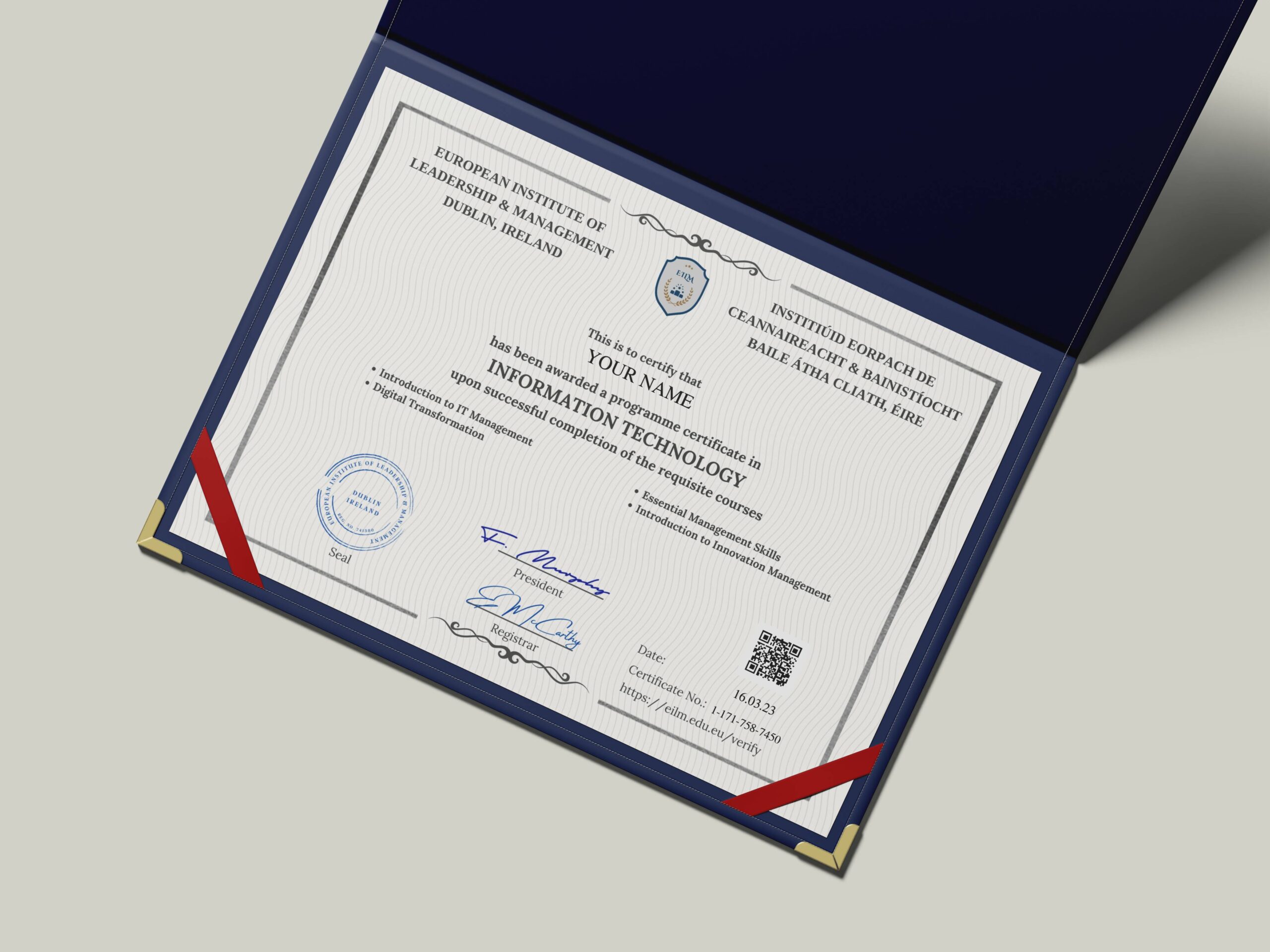
Upon successfully completing all four courses, participants will be awarded the Programme Certificate in Information Technology by the European Institute of Leadership and Management (EILM).
This certificate recognises the participant’s successful completion of a structured professional development programme covering four complementary disciplines: IT management, essential management skills, digital transformation and innovation management.
The programme provides an opportunity to demonstrate a commitment to continuous professional learning and the development of knowledge relevant to information technology management, organisational leadership, digital transformation and technological innovation.
The certificate may complement existing academic qualifications and professional experience by demonstrating additional learning in areas relevant to technology management, business administration and organisational development.
Why Choose This Programme?
The Programme Certificate in Information Technology offers a flexible, accessible and structured approach to developing essential technology management knowledge alongside fundamental business and managerial capabilities.
Modern IT management extends beyond technical systems and infrastructure. Effective technology management requires an understanding of organisational objectives, strategic planning, leadership, innovation and the management of digital change.
By integrating four complementary disciplines, the programme provides participants with a multidisciplinary perspective on how information technology contributes to organisational effectiveness, business innovation and sustainable performance.
Key Benefits of the Programme:
- Comprehensive IT Management Knowledge: Develop an understanding of the fundamental principles and practices involved in managing information technology within modern organisations.
- Multidisciplinary Learning: Explore four interconnected disciplines covering IT management, essential management skills, digital transformation and innovation management.
- Management and Leadership Development: Strengthen your knowledge of leadership, communication, decision-making, problem-solving and team management.
- Strategic Technology Awareness: Understand how organisations align information technology resources and digital initiatives with broader business objectives.
- Digital Transformation Insights: Gain an understanding of digital strategies, technology adoption, emerging technologies and technology-enabled organisational change.
- Innovation Management Knowledge: Explore the principles and processes involved in developing innovative solutions and encouraging organisational creativity.
- IT Governance and Risk Awareness: Understand the importance of effective IT policies, governance frameworks, information security and risk management.
- Business and Organisational Perspective: Develop a broader understanding of how technology, management and innovation contribute to organisational performance.
- Flexible Online Learning: Study entirely online at your own pace, allowing you to balance professional development with existing commitments.
- Accessible Professional Development: Benefit from a structured learning opportunity without the extensive time commitments typically associated with longer management education programmes.
- Programme Certification: Receive a certificate from the European Institute of Leadership and Management upon successful completion of the programme.
The Importance of Information Technology in Modern Organisations
Information technology has become an essential component of organisational operations, business strategy and competitive advantage.
From managing information systems and digital infrastructure to supporting innovation, improving operational efficiency and enhancing customer experiences, technology plays a central role in how modern organisations function and develop.
However, successful technology management requires more than technical expertise. Organisations increasingly depend on professionals who understand how technological resources interact with business processes, people, strategic priorities and organisational objectives.
Effective IT management involves establishing appropriate governance structures, coordinating technology resources, supporting information security and ensuring that IT services contribute to organisational performance.
At the same time, strong management and leadership practices are essential for guiding teams, managing resources, making informed decisions and responding to evolving business requirements.
Digital transformation enables organisations to adopt emerging technologies, modernise business processes and develop innovative approaches to delivering products and services.
Innovation management further supports organisational development by providing structured approaches to identifying opportunities, evaluating ideas and implementing new solutions.
The Programme Certificate in Information Technology recognises these interconnected responsibilities by integrating IT management with essential management skills, digital transformation and innovation management.
Through this multidisciplinary approach, participants can develop a broader perspective on the strategic, managerial and organisational dimensions of information technology and the factors that contribute to successful technology-enabled business environments.
Take the Next Step in Your Professional Development
Successful information technology management requires more than technical knowledge. It demands strategic thinking, effective leadership, innovation and the ability to manage digital transformation in an increasingly technology-driven world.
The Programme Certificate in Information Technology provides an opportunity to strengthen your understanding of technology management, broaden your business perspective and develop knowledge of the essential management principles that underpin organisational success.
Whether your ambition is to progress into an IT management role, strengthen your existing professional capabilities, develop a more strategic approach to technology-related business activities or prepare for greater managerial responsibilities, this programme offers a valuable foundation for continued learning and professional development.
Enrol in the Programme Certificate in Information Technology and take an important step towards strengthening your technology management knowledge, digital transformation awareness and professional leadership capabilities.