
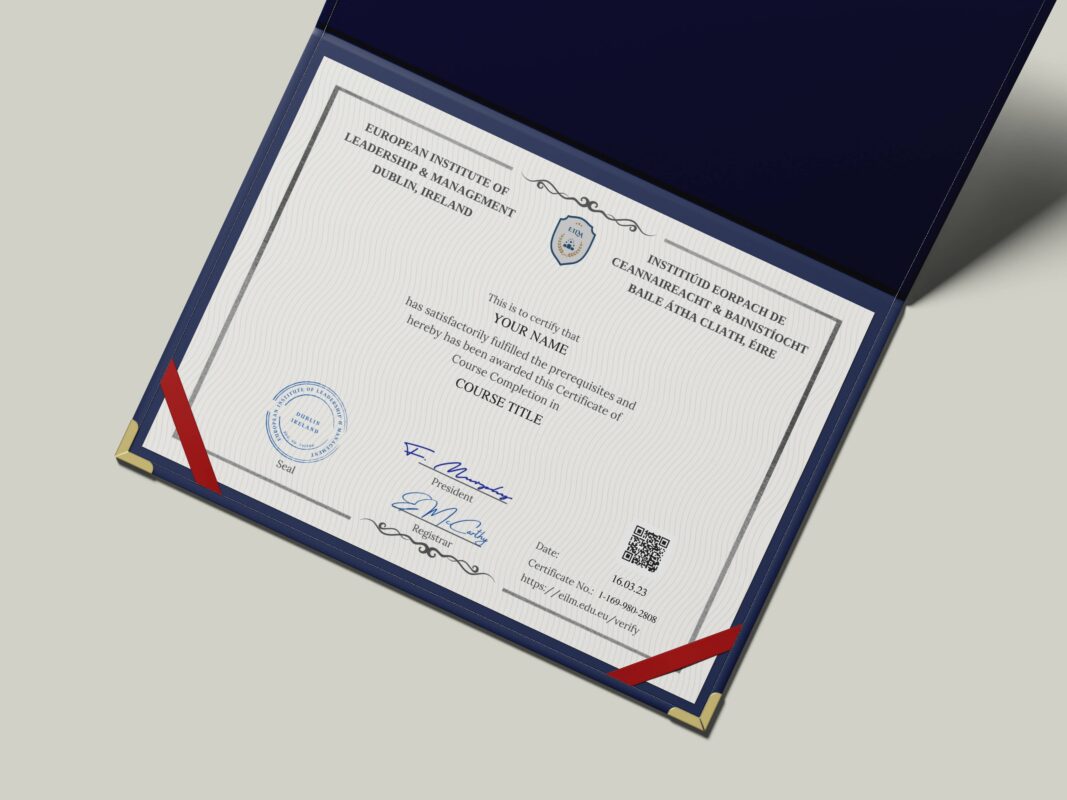
Welcome to the Principles of Economics course, a professional development course offered by the European Institute of Leadership and Management (EILM).
In today’s increasingly interconnected and rapidly changing global economy, understanding fundamental economic principles is essential for making informed decisions, evaluating market conditions and recognising the factors that influence business performance and economic development.
The Principles of Economics course is designed to provide participants with a comprehensive introduction to the fundamental concepts, theories and analytical frameworks that underpin modern economic systems.
Through a structured approach, the course explores the two principal branches of economics: microeconomics, which examines the behaviour and decision-making of individuals, households and businesses, and macroeconomics, which focuses on broader economic developments, including economic growth, inflation, unemployment and government policies.
Participants will develop an understanding of how markets function, how supply and demand influence prices, how resources are allocated and how economic policies affect businesses, consumers and society.
The course also examines different economic systems, market structures, international trade and the increasingly interconnected nature of the global economy. Particular emphasis is placed on understanding how economic concepts can be applied to practical business situations, organisational decision-making and contemporary economic challenges.
Whether you are a business professional seeking to strengthen your economic knowledge, an entrepreneur interested in understanding market dynamics, a manager involved in strategic decision-making or an aspiring professional looking to develop a foundation in economics, this course provides valuable insights into the principles that shape economic activity.
By combining fundamental economic theories with practical applications, the course encourages participants to develop analytical thinking, economic awareness and a broader understanding of the factors influencing business environments and economic performance.
Course Objectives
The primary objective of the Principles of Economics course is to equip participants with a sound understanding of essential economic concepts and their application to business, government policy and everyday decision-making.
Upon completion of the course, participants should be able to:
- Understand Fundamental Economic Principles: Define and explain essential economic concepts, including scarcity, opportunity cost, resource allocation, incentives and economic efficiency.
- Explain Supply and Demand: Understand how supply and demand interact to determine market prices, influence consumer behaviour and affect the allocation of goods and services.
- Analyse Market Structures: Identify and compare different market structures, including perfect competition, monopolistic competition, oligopoly and monopoly, and understand their implications for businesses and consumers.
- Understand Economic Systems: Examine different economic systems and evaluate how economic institutions, market mechanisms and government interventions influence the allocation of resources.
- Interpret Macroeconomic Indicators: Understand key economic indicators, including gross domestic product (GDP), inflation, unemployment, interest rates and economic growth.
- Examine Economic Policies: Explain the principles of fiscal and monetary policy and understand how government expenditure, taxation and central bank decisions influence economic activity.
- Understand International Trade: Explore the principles of international trade, comparative advantage, globalisation and the opportunities and challenges associated with international economic integration.
- Apply Economic Concepts to Business Decisions: Recognise how economic conditions, market developments and resource constraints influence business strategies, pricing and investment decisions.
- Evaluate the Impact of Public Policy: Understand how economic regulations, taxation, government interventions and public policies affect markets, businesses and society.
- Develop Economic Analytical Skills: Apply fundamental economic reasoning to interpret market developments, examine economic challenges and support informed decision-making.
Course Learning Outcomes
Upon successful completion of the Principles of Economics course, participants will have developed the knowledge to:
- Explain fundamental microeconomic and macroeconomic concepts and their relevance to modern economies.
- Understand the relationship between scarcity, resource allocation and economic decision-making.
- Analyse how supply, demand and market structures influence prices, competition and business behaviour.
- Recognise the characteristics of different economic systems and the role of government intervention.
- Interpret key macroeconomic indicators and understand their implications for economic performance.
- Explain the objectives and effects of fiscal and monetary policies.
- Understand the principles of international trade and global economic integration.
- Evaluate how economic developments influence businesses, consumers and investment decisions.
- Apply fundamental economic concepts to practical business and professional situations.
- Develop a stronger foundation for analytical thinking, economic awareness and informed decision-making.
Who Should Enrol?
The Principles of Economics course is designed for individuals seeking to develop or strengthen their understanding of economic concepts, market dynamics and the factors influencing business and financial decisions.
The course is particularly relevant for:
- Business Managers and Executives seeking to understand how economic conditions influence organisational strategy and performance.
- Entrepreneurs and Business Owners interested in market behaviour, pricing, resource allocation and economic opportunities.
- Finance and Accounting Professionals seeking to strengthen their understanding of the economic factors influencing financial decisions.
- Business Development and Marketing Professionals interested in economic trends, consumer behaviour and competitive market environments.
- Aspiring Economists and Analysts seeking foundational knowledge of economic theories and analytical principles.
- Public Sector and Policy Professionals interested in understanding the economic implications of government policies and public expenditure.
- Students and Recent Graduates seeking an introduction to economics and its applications across different professional disciplines.
- Individuals Committed to Continuous Professional Development who wish to strengthen their economic knowledge and analytical capabilities.
Why Study Principles of Economics?
Economics provides a valuable framework for understanding how individuals, businesses, governments and societies make decisions in an environment of limited resources and competing priorities.
A sound understanding of economic principles enables professionals to interpret market developments, recognise economic opportunities and appreciate the wider implications of business and policy decisions.
By exploring both microeconomic and macroeconomic concepts, participants can develop a more comprehensive perspective on the forces that shape organisational performance, consumer behaviour, national economies and international markets.
Key Benefits of the Course:
- Fundamental Economic Knowledge: Build a structured understanding of essential economic concepts, theories and principles.
- Business and Market Awareness: Understand how market conditions, competition and economic incentives influence business decisions.
- Economic Analytical Skills: Strengthen your ability to interpret economic developments and apply logical reasoning to economic challenges.
- Macroeconomic Understanding: Gain insights into inflation, employment, economic growth and government policies.
- International Perspective: Explore the relationships between global markets, international trade and economic integration.
- Practical Application: Understand how economic principles can support business planning, resource allocation and informed decision-making.
- Professional Development: Develop transferable knowledge relevant to business, finance, management, public policy and related professional fields.
Take the Next Step in Your Professional Development
Understanding economics is more than studying markets and financial indicators. It is about recognising how decisions are made, how resources are allocated and how economic forces shape businesses, societies and the wider world.
The Principles of Economics course provides an opportunity to strengthen your economic knowledge, develop analytical thinking and gain a broader understanding of the principles that influence modern business and economic activity.
Whether your ambition is to improve your business decision-making, strengthen your financial and economic awareness or establish a foundation for further professional development, this course offers a valuable introduction to the essential concepts of economics.
Enrol in the Principles of Economics course and take an important step towards strengthening your economic understanding, analytical capabilities and professional knowledge.